
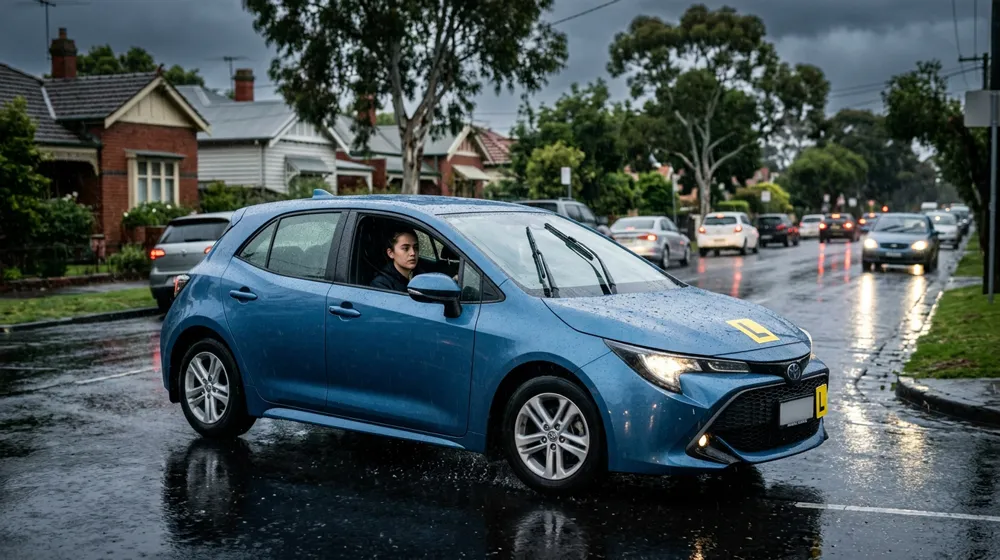
Drive with Confidence, Even in the Rain!
Learn how to handle wet roads, improve vehicle control and stay safe during Melbourne’s unpredictable rainy weather.
Imagine driving along Princes Highway when suddenly heavy rain hits. The road becomes slippery, visibility drops, and the car in front starts braking. Would you know what to do?
Driving in wet weather can be particularly challenging for learner drivers. Rain affects visibility, tyre grip and stopping distances, making even familiar roads more difficult to navigate.
Whether you’re learning to drive in Officer, Pakenham, Berwick or Narre Warren, understanding how to adjust your driving in rainy conditions is an essential skill. This guide explains practical wet weather driving techniques, common mistakes to avoid and how to build confidence behind the wheel.
Why Is Driving in Wet Weather More Difficult?
Rain changes the way your vehicle responds to the road. Water reduces tyre grip, makes road markings harder to see and can increase the distance needed to stop safely.
These challenges become even more noticeable when you’re still developing your driving skills. You may need more time to recognise hazards, judge distances and react to sudden changes in traffic.
Three important wet weather risks
- Reduced tyre grip: Water on the road makes it easier for tyres to lose traction, particularly during sudden braking or sharp turns.
- Longer stopping distances: Your vehicle may need significantly more room to slow down and stop safely.
- Poor visibility: Rain, water spray and fogged-up windows can make it harder to see other vehicles, cyclists and pedestrians.
In South East Melbourne, these conditions can be especially challenging on busy roads such as Princes Highway and around intersections, roundabouts and shopping areas in Berwick and Narre Warren.
10 Essential Wet Weather Driving Tips for Melbourne Learners
Knowing what to do before and during rainfall can make a significant difference to your safety. Follow these practical tips whenever you need to drive in wet conditions.
1. Reduce Your Speed and Drive to the Conditions
One of the most important rules of wet weather driving is to slow down. The posted speed limit is not necessarily a safe speed when roads are wet or visibility is poor.
Reduce your speed according to the intensity of the rain, road surface and surrounding traffic. Avoid sudden acceleration, sharp turns and unnecessary lane changes.
2. Increase Your Following Distance to at Least Four Seconds
Following too closely is particularly dangerous in rainy weather because your vehicle may take longer to stop.
In wet weather, increase your following distance to at least four seconds. Allow even more space when rain is heavy, visibility is poor or road conditions are particularly slippery.
To check your distance, choose a fixed object beside the road. When the vehicle ahead passes it, start counting. You should reach the same object no sooner than four seconds later.
3. Use Your Low-Beam Headlights When Visibility Is Reduced
Rain and water spray can make your vehicle difficult for other drivers to see, even during daylight.
Switch on your low-beam headlights when visibility is reduced. Avoid using high beams in poor visibility when they could dazzle other road users.
4. Brake and Accelerate Gently
Sudden braking or acceleration can cause your tyres to lose grip on slippery surfaces.
Look further ahead, anticipate traffic changes and begin slowing down earlier. Apply the brakes progressively and avoid abrupt steering movements.
5. Avoid Driving Through Deep Puddles and Floodwater
Large puddles can hide potholes, debris and damaged road surfaces. Driving through standing water can also cause water to enter parts of your vehicle or lead to loss of tyre grip.
Never attempt to drive through floodwater. If water covers the road, find another route or wait somewhere safe until conditions improve.
6. Be Careful Around Slippery Road Surfaces
Wet metal surfaces, painted road markings and tram tracks can become slippery during rainfall. Avoid sudden braking, acceleration or sharp steering movements when driving over these surfaces.
If you drive in Melbourne areas with tram networks, take extra care when crossing tram tracks. Approach steadily, remain aware of approaching trams and avoid abrupt movements.
7. Keep Your Windscreen Clear
Rain can quickly reduce visibility, while moisture inside your vehicle may cause the windows to fog up.
Use your windscreen wipers as needed and switch on the front and rear demisters when necessary. Your air conditioning can also help remove moisture from the air inside the vehicle.
8. Watch Out for Aquaplaning
Aquaplaning happens when a layer of water builds up between your tyres and the road, reducing or temporarily removing tyre contact with the surface.
If your vehicle starts aquaplaning, ease off the accelerator gradually, keep the steering steady and avoid sudden braking or sharp steering movements. Allow the tyres to regain contact with the road before gently adjusting your direction.
9. Check Your Tyres and Windscreen Wipers
Your vehicle needs properly maintained tyres and working wipers to handle rainy conditions safely.
Before driving, check that your tyres have adequate tread and correct pressure, and make sure your wipers, headlights and brake lights are working properly.
10. Know When to Stop Driving
Sometimes the safest decision is not to continue driving.
If heavy rain makes it difficult to see the road or maintain control, find a safe place away from moving traffic and wait for conditions to improve. Never stop in a dangerous position simply because visibility has decreased.
Common Wet Weather Driving Mistakes Learners Should Avoid
Even learners who drive confidently in dry weather can make mistakes when rain changes road conditions. Recognising these habits early can help you become a safer driver.
- Driving at the same speed as in dry conditions.
- Following other vehicles too closely.
- Braking suddenly when approaching intersections.
- Forgetting to use headlights when visibility is reduced.
- Making sharp turns or sudden lane changes.
- Driving through deep puddles or floodwater.
- Panicking and making abrupt steering movements when the vehicle starts to skid.
- Ignoring fogged-up windows and worn windscreen wipers.
These mistakes can reduce your ability to respond to unexpected hazards, increase the risk of losing vehicle control and make wet weather driving more dangerous. Recognising and correcting them early is an important part of becoming a responsible driver.
The best way to avoid these mistakes is to develop good observation, anticipation and vehicle-control habits through regular practice.
Wet Weather Driving Challenges in South East Melbourne
Driving in the rain is not just about controlling your vehicle. You also need to understand how different roads and traffic environments affect your decisions.
Driving on Princes Highway
Busy roads such as Princes Highway require extra attention during heavy rain. Water spray from larger vehicles can reduce visibility, while traffic may slow down unexpectedly. Maintain a safe following distance and avoid sudden lane changes.
Driving Around Berwick and Narre Warren
Roundabouts, shopping centre entrances and busy intersections require careful observation in wet conditions. Slow down before entering a roundabout, check for pedestrians and cyclists, and avoid harsh braking while turning.
Driving Around Officer and Pakenham
Learners travelling through Officer and Pakenham may encounter changing traffic conditions, intersections and roads with varying speed limits. Be prepared to adjust your speed when rain affects visibility or road grip.
If you’re learning in these areas, explore our local automatic driving lesson pages:
How Can Learner Drivers Build Confidence in Rain?
Reading about wet weather driving is a good starting point, but knowing what to do and being able to do it confidently are two different things.
With appropriate supervision and suitable weather conditions, learners can gradually develop practical skills such as:
- Maintaining a safe speed on wet roads.
- Judging safe following distances.
- Braking progressively and controlling acceleration.
- Keeping appropriate visibility through the windscreen.
- Recognising slippery road surfaces and potential hazards.
- Managing intersections and roundabouts in rainy weather.
At Start Driving School, our automatic driving lessons focus on developing practical driving skills for real road conditions. Where weather and lesson conditions allow, students can also gain supervised experience in wet weather.
If you’re a nervous learner, you may also find our guide helpful: How to Prepare for Your Driving Test When You Feel Anxious
More Driving Tips to Help You Become a Safer Driver
Wet weather safety is just one part of becoming a confident driver. Explore these related guides to improve your driving knowledge:
Automatic Driving Lesson Prices
Looking to improve your driving skills with professional instruction? Here are our automatic driving lesson options:
Contact us to confirm lesson availability and package details.
Frequently Asked Questions About Wet Weather Driving
Is it safe for beginner drivers to drive in heavy rain?
Heavy rain can make driving conditions dangerous, particularly for inexperienced drivers. Avoid unnecessary journeys during severe weather. If conditions deteriorate while driving, find a safe place to stop and wait for visibility to improve.
How many seconds should I leave between cars in wet weather?
In wet weather, leave at least a four-second gap between your vehicle and the vehicle ahead. Increase this distance further when visibility is poor, rainfall is heavy or road surfaces are particularly slippery.
Should I turn on my headlights when driving in rain?
Yes. Use your headlights when rain reduces visibility. Your headlights and taillights must be switched on in hazardous conditions that reduce visibility. Use low beams when appropriate and avoid dazzling other road users.
What should I do if my car starts aquaplaning?
Stay calm, gradually ease off the accelerator, keep your steering steady and avoid sudden braking. Allow your tyres to regain contact with the road before gently adjusting your direction.
Can I practise wet weather driving with an instructor?
Yes. Supervised practice can help you understand how to control your vehicle in wet conditions. Lessons should only proceed when weather and road conditions are suitable for safe training.
Are tram tracks dangerous when it rains?
Wet metal tram tracks can be slippery. Avoid sudden braking, acceleration or sharp steering when crossing them, and always watch for approaching trams.
Should I drive through flooded roads?
No. Never drive through floodwater, even if it appears shallow. Find another route and wait until the road is safe to use.
Ready to Become a More Confident Driver?
Rainy weather should not catch you off guard. Learning how to manage slippery roads, maintain safe distances and respond to changing conditions can help you become a safer and more confident driver.
Start Driving School provides professional automatic driving lessons across South East Melbourne. Whether you’re a beginner, a nervous learner or preparing for your VicRoads driving test, we’re here to help you develop practical driving skills.
Book Your Automatic Driving Lesson Today!
Learn to drive safely and confidently in real Melbourne road conditions.
Call • SMS • WhatsApp
Start Driving School – Learn to Drive with Confidence
For additional road safety information, visit Transport Victoria – Safe Driving Tips.