
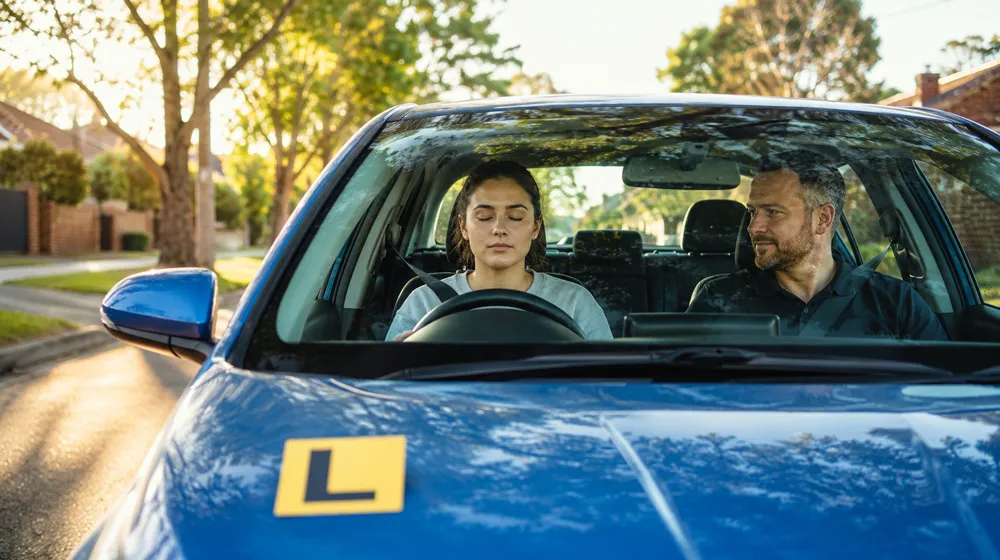
Worried about making mistakes during your VicRoads drive test? Learn practical ways to manage nerves, stay focused and prepare with greater confidence.
Feeling Nervous About Your Driving Test?
Do you drive confidently during lessons but worry that everything will go wrong during your VicRoads driving test? Perhaps you are afraid of making a mistake at a roundabout, forgetting a head check or going blank when the examiner gives you an instruction.
Driving test anxiety can make familiar situations feel more difficult. The goal is not to eliminate every nervous feeling. It is to learn how to manage your nerves while staying focused on safe driving.
With practical preparation, realistic expectations and targeted driving practice, you can work towards feeling more comfortable behind the wheel.
Quick Tips to Calm Your Nerves
- Take a few slow, comfortable breaths before the test begins.
- Practise the driving skills that make you feel least confident.
- Focus on the next driving decision instead of worrying about passing.
- Allow enough time to arrive at the testing centre.
- Learn how to recover calmly after an unexpected mistake.
Why Is Driving Test Anxiety So Common?
A driving test can feel stressful because you are being assessed while managing traffic, road rules, observations and vehicle control. Worrying about the result can make it harder to concentrate on the task in front of you.
You may notice a faster heartbeat, tense shoulders, shallow breathing or racing thoughts. Some learners start overthinking simple decisions that usually feel natural during a lesson.
Common concerns include:
- Making a mistake at a roundabout or intersection.
- Forgetting a head check before changing lanes.
- Struggling with reverse parallel parking or a three-point turn.
- Misunderstanding the examiner’s instructions.
- Losing concentration after making a mistake.
Feeling nervous does not automatically mean you are unprepared. However, if anxiety affects your concentration or decision-making, it is worth addressing alongside your practical driving skills.
5 Practical Ways to Manage Driving Test Anxiety
1. Replace Negative Thoughts with Realistic Ones
Thinking “I must pass today” can put unnecessary pressure on every decision. Instead, remind yourself that your job is to demonstrate safe driving, one situation at a time.
Instead of: “If I make one mistake, I will fail.”
Try: “I will focus on driving safely and responding to each situation as it happens.”
2. Practise Slow, Comfortable Breathing
Before the test begins, sit comfortably while the vehicle is parked. Breathe in gently through your nose and exhale slowly without forcing your breath. Repeat for several comfortable breaths and relax your shoulders.
You do not need to follow a strict breathing count. If you feel dizzy or uncomfortable, return to your normal breathing. Never close your eyes or perform distracting relaxation exercises while driving.
3. Practise the Skills That Worry You Most
If lane changes, roundabouts, parking or busy intersections make you nervous, ask your instructor to help you practise those situations. Focus on observation, positioning, signalling, speed control and safe decision-making.
Repeated practice with useful feedback can help you develop more consistent driving habits. The goal is not to make every manoeuvre perfect, but to perform it safely and confidently.
4. Visualise Yourself Responding Calmly
Spend a few minutes imagining yourself listening to an instruction, checking the road, making a safe decision and continuing your drive. Include situations that normally worry you.
For example, imagine missing a turn and calmly following the examiner’s next instruction instead of making a sudden correction. Visualisation can support preparation, but it does not replace practical driving experience.
5. Learn to Recover After a Mistake
One mistake does not mean you should stop concentrating on the rest of the test. If something unexpected happens, maintain control of the vehicle, prioritise safety and focus on the next instruction.
- Do not make a sudden manoeuvre to hide or correct an error.
- Continue checking the road and surrounding traffic.
- Listen carefully to the examiner.
- Do not assume that a minor error automatically means you have failed.
How to Prepare the Day Before Your Driving Test
The day before your test is about preparation, not trying to learn everything again. Keep your routine simple and avoid putting yourself under unnecessary pressure.
- Get enough sleep: Avoid staying up late worrying about the result.
- Prepare your essentials: Check your appointment details and required documents.
- Plan your journey: Allow enough time to reach the testing centre.
- Review key skills: Focus on areas identified during previous lessons.
- Eat normally: Have a meal that suits you and stay hydrated.
- Keep expectations realistic: Focus on safe driving rather than trying to be perfect.
What Should You Do on Test Day?
- Arrive with enough time to settle in.
- Avoid comparing your driving ability with other learners.
- Listen carefully to each instruction.
- Maintain a safe and appropriate speed.
- Keep checking for pedestrians, cyclists, signs and hazards.
- Focus on one driving decision at a time.
The examiner is assessing your driving performance. You do not need to prove that you feel completely confident; you need to demonstrate that you can drive safely and follow the road rules.
Can a Mock Driving Test Help Reduce Anxiety?
A mock test gives you an opportunity to practise driving in an assessment-style setting. It can help you understand which skills need more attention and become more familiar with following instructions without constant coaching.
After the mock test, review your strengths and weaknesses with your instructor. Use the feedback to create a focused practice plan before your actual assessment.
Preparing for the Pakenham East testing centre? Read our guide to Pakenham driving test routes to learn more about local driving conditions and the situations you can practise.
No instructor can guarantee the exact route an examiner will choose or promise a passing result. The aim is to help you build skills that transfer to different road conditions.
Driving Lessons for Nervous Learners
If anxiety is affecting your driving lessons, a patient instructor and a structured practice plan may help you work through challenging situations at a manageable pace.
At Start Driving School, we provide automatic driving lessons tailored to your experience and learning goals. You can practise vehicle control, observation, lane changes, roundabouts and parking while receiving feedback on the areas that need improvement.
If you are a beginner, feel anxious behind the wheel or have previously failed your test, explore our driving lessons for nervous learners.
We provide lessons in several South East Melbourne suburbs:
- Driving lessons in Pakenham
- Driving lessons in Officer
- Driving lessons in Berwick
- Driving lessons in Clyde
Each learner progresses at a different pace. Your lessons should focus on your current ability, areas for improvement and readiness for the driving test.
Automatic Driving Lesson Prices
If you need additional practice before your VicRoads test, choose the lesson option that suits your preparation needs.
For full details, visit our driving lesson prices and packages page.
Frequently Asked Questions About Driving Test Anxiety
Is it normal to feel nervous before a VicRoads driving test?
Yes. Many learners feel nervous before an assessment. Preparing your driving skills and practising ways to manage stress can help you approach the test more confidently.
Can driving test anxiety make me fail?
Anxiety may affect concentration, observation and decision-making. However, feeling nervous does not automatically mean you will fail. Focus on safe driving and prepare the skills that need improvement.
When should I start preparing mentally for my test?
Start as soon as you notice anxiety affecting your preparation. Practise calming routines alongside your driving lessons rather than waiting until the day before the test.
What should I do if I make a mistake during the test?
Maintain control of the vehicle, prioritise safety and focus on the next instruction. Do not assume that a mistake automatically means you have failed.
Can driving lessons help nervous learners?
Supportive instruction and structured practice may help you become more familiar with challenging situations. An instructor can identify areas for improvement and help you plan your practice.
What if my anxiety feels overwhelming?
If anxiety repeatedly interferes with concentration or daily activities, consider speaking with a qualified health professional. You can also discuss a gradual approach to driving practice with your instructor.
Ready to Build Your Driving Confidence?
Practise the skills that worry you, get personalised feedback and prepare for your VicRoads drive test one step at a time.
Call • SMS • WhatsApp • Book Online