
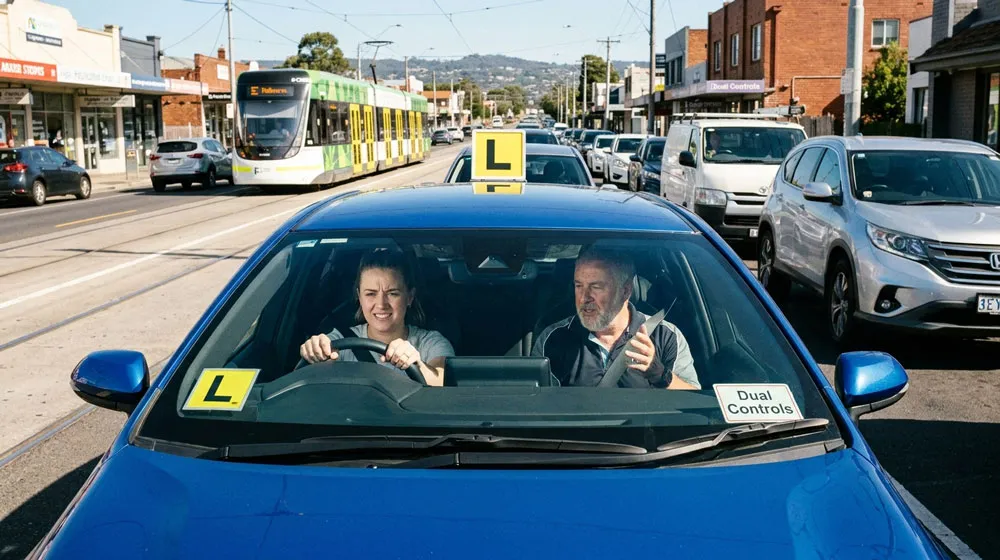
Nervous about busy roads, roundabouts or changing lanes? Learn practical techniques to handle Melbourne traffic more safely and build confidence behind the wheel.
Driving in Melbourne traffic can feel intimidating when you are still learning. Busy intersections, stop-start traffic, multi-lane roundabouts and unfamiliar roads can make even a short journey stressful.
The good news? You do not need to feel confident before you start. By learning how to observe traffic, maintain a safe following distance, choose the right lane and anticipate hazards, you can gradually become a safer, more confident driver.
In this guide, you will learn practical tips for driving in Melbourne traffic, including what to do when other drivers are impatient, how to approach roundabouts and how to share the road with trams. These skills are useful whether you are a beginner, returning to driving or preparing for your driving test.
What You Will Learn
- How to stay calm in heavy traffic
- How to approach roundabouts and intersections
- How to change lanes and merge safely
- What to know about Melbourne trams
- How to practise in increasingly challenging conditions
- When professional automatic driving lessons can help
Why Is Driving in Melbourne Traffic Difficult for Beginners?
Melbourne traffic presents different challenges depending on where and when you drive. Busy arterial roads such as Princes Highway, crowded intersections, freeway entry lanes and unfamiliar suburban streets all require careful observation and decision-making.
New drivers may find it difficult to judge gaps in traffic, monitor mirrors, follow navigation instructions and maintain a safe speed at the same time. When another driver sounds their horn or follows too closely, the pressure can feel even greater.
Rather than trying to master everything at once, focus on one skill at a time. Practise in quieter conditions before gradually introducing busier roads and more complicated traffic situations.
1. How to Stay Calm in Heavy Melbourne Traffic
Stop-start traffic can test your patience, especially when you are worried about making a mistake. The key is to give yourself enough time and avoid letting other drivers dictate your decisions.
- Leave enough following distance. Maintain a safe gap and increase it when visibility is poor, the road is wet or traffic conditions require more stopping distance.
- Look well ahead. Watch for brake lights, traffic signals, merging vehicles and developing queues so you can respond smoothly.
- Brake progressively. Avoid unnecessary sudden braking and harsh acceleration when traffic slows and starts again.
- Ignore pressure from impatient drivers. Never speed up or make an unsafe manoeuvre simply because someone behind you is tailgating or sounding their horn.
- Keep your attention on driving. Set your navigation and mirrors before moving off, and avoid handling your phone while driving.
Remember, reaching your destination a little later is better than making a rushed decision. If traffic becomes overwhelming, remain predictable, follow the road rules and pull over somewhere safe and legal when appropriate.
2. How to Navigate Melbourne Roundabouts
Roundabouts can be stressful because you need to assess traffic, select the correct lane and signal appropriately. They are worth practising carefully, especially if you are learning in Berwick, Pakenham or Narre Warren.
Before entering a roundabout
- Slow down and look for signs, lane arrows and road markings.
- Choose your lane early according to your intended exit and the directions provided.
- Give way to vehicles already in the roundabout and to trams entering or approaching it.
- Enter only when there is a safe gap.
While driving through the roundabout
- Stay in your designated lane and follow the lane markings.
- Signal when required for your intended turn and signal left when exiting where practicable.
- Check for motorcycles, bicycles and other road users who may be harder to see.
- Avoid changing lanes within the roundabout unless it is safe and permitted.
The correct lane and signalling requirements depend on the layout and your intended direction. For detailed Victorian rules, consult the official roundabout driving guidance.
3. Driving Safely Around Melbourne Trams
Melbourne’s trams are an important part of the city’s traffic, and drivers need to understand how to share the road with them safely.
- Give way to trams: Watch for trams approaching intersections and follow traffic signals and road signs. Give way when required.
- Be careful at tram stops: At a roadside tram stop without a safety zone, you must stop behind the tram while its doors are open and passengers are getting on or off. You may pass the stationary tram at 10 km/h only after the doors have closed and the road is clear of pedestrians.
- Avoid sudden movements: Never cut in front of a tram or change lanes abruptly near one. Trams cannot stop as quickly as cars.
- Check before turning: Look for trams before turning or crossing tram tracks, and follow all traffic signals and road markings.
Staying alert around trams helps protect you, your passengers and people boarding or leaving public transport.
4. How to Change Lanes and Merge Safely
Changing lanes on a busy road can feel difficult when vehicles are travelling at different speeds. The solution is to plan ahead, observe carefully and move only when there is a safe gap.
- Plan early. Watch road signs and navigation instructions so you have enough time to prepare for your exit or turn.
- Check your mirrors. Assess the traffic behind and beside you before moving.
- Signal your intention. Give other road users clear warning before changing lanes.
- Check your blind spot. A vehicle or motorcycle may be beside you without being visible in your mirrors.
- Wait for a safe gap. Never force your way into another lane or assume another driver will slow down to let you in.
- Move smoothly. Once safe, change lanes without abrupt steering and cancel your indicator when appropriate.
When merging, adjust your speed to the traffic flow and follow the signs and road markings. If you miss your exit or cannot change lanes safely, continue along your current route and find another way rather than making a sudden manoeuvre.
5. Is Automatic Driving Easier in Melbourne Traffic?
For many learners, an automatic car makes stop-start traffic easier to manage because there is no clutch pedal or manual gear changing. This can leave more attention available for observation, steering, speed control and decision-making.
However, an automatic transmission does not replace the need to learn road rules, judge traffic gaps or anticipate hazards. You still need to practise smooth braking, controlled acceleration and safe positioning.
At Start Driving School, we provide automatic driving lessons using an automatic Toyota Corolla. Learners can build their skills progressively, starting with the fundamentals before moving on to more challenging traffic situations.
Explore our local lessons in Officer and Pakenham to find out more about learning in your area.
6. How to Build Confidence on Busy Roads
Confidence develops through practice, feedback and experience. You do not have to start on a major road or drive through the busiest part of Melbourne on your first lesson.
- Start with familiar, quieter streets. Practise steering, braking, positioning and observation before adding more traffic.
- Progress gradually. Introduce more complex intersections, roundabouts and busier roads as your skills improve.
- Practise one challenge at a time. Work on lane changes during one session and roundabouts during another if that helps you learn.
- Review mistakes constructively. Understand what happened, what you could do differently and how to recognise the situation next time.
- Choose suitable practice conditions. Avoid starting with peak-hour traffic if you are not ready for it. Gradually practise different conditions as your ability improves.
If you feel anxious behind the wheel, our guide to driving lessons for nervous and anxious learners explains how a supportive, step-by-step approach can help you develop confidence.
If you are returning to driving after a long break, you may also benefit from refresher driving lessons in Melbourne.
7. Preparing for Your VicRoads Driving Test
Driving in busy traffic is also an important part of developing the skills needed for independent driving. Test preparation should focus on consistent, safe driving rather than memorising a particular route.
During practice, work on observation, speed management, lane positioning, intersections, hazard awareness and following road signs. Your instructor can help identify areas that need more attention before your assessment.
For more preparation advice, read our guide to common VicRoads driving test mistakes.
Not sure how much practice you need? Our article on how many driving lessons you may need in Melbourne explains the factors that affect your learning progress.
Automatic Driving Lesson Prices
If you would like professional help practising traffic skills, here are our current lesson options.
| Lesson | Price |
|---|---|
| Single lesson (60 minutes) | $65 |
| 5-lesson | $300 |
| Night driving lesson | $75 |
The five-lesson package works out to $60 per lesson. Choose the option that suits your experience and learning goals.
Ready to Feel More Confident on the Road?
Build your driving skills with practical automatic lessons tailored to your experience. Start with the basics and work towards handling busier roads with greater confidence.
Frequently Asked Questions
What is the best time for a beginner to practise driving in Melbourne?
Quieter periods can make it easier to learn basic skills, but traffic varies by road and day. Start in conditions that match your current ability, then gradually practise busier roads and different traffic situations.
How can I stop feeling nervous in heavy traffic?
Practise gradually, leave plenty of time for your journey and focus on one skill at a time. If anxiety affects your driving, a patient instructor can help you develop strategies and build experience without unnecessary pressure.
Are automatic driving lessons suitable for beginners?
Yes. Automatic lessons allow beginners to learn vehicle control without operating a clutch or manually changing gears. You still need to develop safe observation, road positioning and traffic judgement.
How do I change lanes safely in heavy traffic?
Plan ahead, check your mirrors, signal, check your blind spot and move only when a safe gap is available. Never force a lane change because you are approaching an exit.
Can driving lessons help me prepare for busy roads and roundabouts?
Yes. Practical lessons can help you practise observation, lane choice, signalling and safe gap selection in a structured way. Progress should match your ability and the conditions you can safely manage.
Book Automatic Driving Lessons in South East Melbourne
Start Driving School helps learners develop practical driving skills through structured automatic lessons. We serve learners in Officer, Pakenham, Berwick and Narre Warren, as well as other surrounding areas.
Whether you are learning for the first time, preparing for your driving test or looking to improve your confidence in traffic, we can help you work towards your driving goals.
Take the Next Step Towards Confident Driving
Contact Start Driving School to discuss your lessons or book online.