
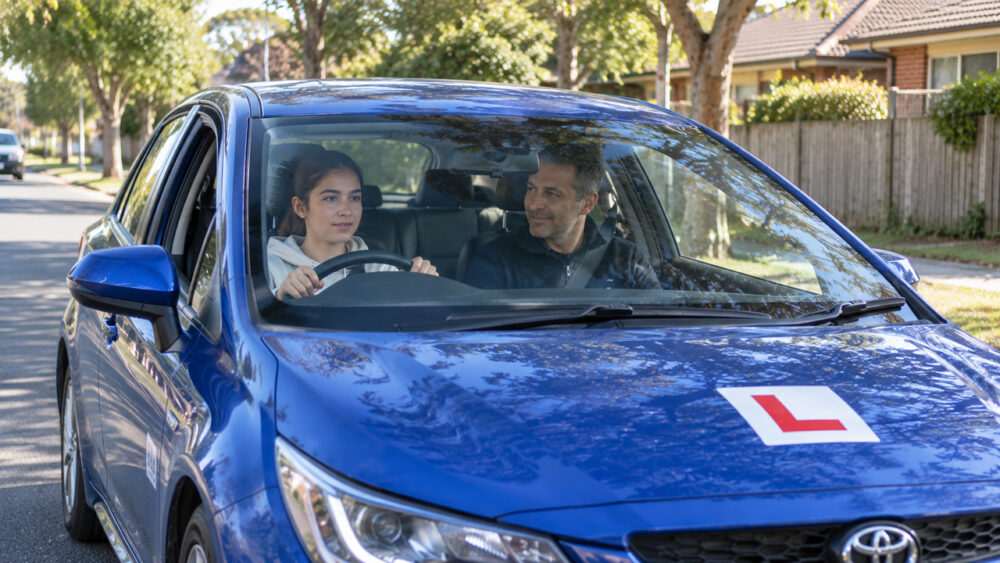
Helping Your Teen Become a Safe, Confident Driver Starts With You
Learn how to supervise driving practice, understand Victoria’s learner driver rules and avoid common mistakes that can put your child at risk.
Learning to drive doesn’t end when your teenager passes their learner permit test. In fact, that’s when some of the most important learning begins. As a parent or supervising driver, you play a major role in helping your child develop safe driving habits, make better decisions and gain confidence behind the wheel.
But supervising a learner driver isn’t always easy. You may feel nervous when your child approaches a busy intersection, struggles with a roundabout or makes an unexpected mistake. You also need to understand your legal responsibilities and make sure every practice session is safe and properly recorded.
This guide explains how to supervise a learner driver in Victoria, what the rules require, how to make private practice more effective and when professional driving lessons can help both parents and learners.
What You’ll Learn in This Guide
- Who can legally supervise a learner driver in Victoria
- How the 120-hour learner driving requirement works
- How to plan safe and productive practice sessions
- Common mistakes parents should avoid
- How to supervise driving in Melbourne traffic
- When professional driving lessons can make a difference
- How to help your child prepare for the VicRoads Drive Test
Who Can Legally Supervise a Learner Driver in Victoria?
Before taking your child out for driving practice, make sure you meet Victoria’s supervising driver requirements. A person cannot automatically supervise a learner simply because they have experience driving.
According to Transport Victoria, a supervising driver must:
- Hold a current, full Australian or overseas driver licence. A probationary licence is not sufficient.
- Hold a licence that permits them to drive the type of vehicle being used by the learner.
- Sit in the front passenger seat next to the learner driver.
- Carry their digital driver licence or physical licence card.
- Have a blood alcohol concentration (BAC) of no more than 0.05. Authorised driving instructors and drivers with a Z licence condition must have a zero BAC.
- Complete the required supervising driver details in the learner’s logbook, including the relevant declaration when required.
Importantly, the general supervising driver requirements do not impose a universal four-year licence-holding rule. Always check the current official requirements if your circumstances are unusual.
Official information: Transport Victoria – Learner and Probationary Driver Road Rules.
Additional Safety Rules Parents Should Check
Before each practice session, make sure your learner understands and follows these important Victorian road rules:
- Display L plates on the front and rear of the vehicle, positioned so they are clearly visible from at least 20 metres away.
- Make sure the learner carries their digital learner permit, physical learner permit card or permit receipt whenever they drive.
- Remember that learner drivers must maintain a zero blood alcohol concentration (BAC).
- Do not allow the learner to use a mobile phone or portable device while driving, including hands-free functions and voice controls.
Understanding the 120-Hour Learner Driving Requirement
One of the most important responsibilities for parents is helping their child gain enough supervised driving experience before applying for a probationary licence.
For learner drivers under 21
120 Hours
Minimum supervised driving experience
20 Hours
Minimum night driving experience, included in the 120 hours
Learners who are under 21 when applying for their probationary licence must complete at least 120 hours of supervised driving, including at least 20 hours at night. They must record their practice using the approved Learner Log Book or myLearners app.
The night driving requirement is part of the total 120 hours, not an additional 20 hours. Learners aged 21 or older are not subject to the same mandatory 120-hour logbook requirement, although gaining substantial supervised experience remains strongly recommended.
Completing the 120-hour requirement is not the only condition for getting a probationary licence. Learners under 21 must also hold their learner permit continuously for at least 12 months before taking the Drive Test. They must meet the other eligibility requirements, including passing the Hazard Perception Test.
How Parents Can Help Track Driving Hours
- Record each completed practice session accurately.
- Make sure the supervising driver details are correctly entered.
- Include the date, duration and other required trip information.
- Keep track of night driving separately.
- Review the learner’s progress regularly rather than waiting until the final weeks.
Don’t leave logbook entries until the end. Keeping records up to date helps prevent missing information and unnecessary delays when your child is ready for their driving test.
Read more: Prepare for your probationary licence.
How to Supervise Your Child During Driving Practice
Being an experienced driver doesn’t automatically make you an effective driving supervisor. Your child needs clear instructions, enough time to process information and opportunities to learn from mistakes without feeling overwhelmed.
1. Start With One Skill at a Time
Avoid asking your child to practise parking, lane changes, roundabouts and complex intersections during the same early session. Choose one main skill and allow enough time to practise it properly.
For example, if your child is learning to turn at intersections, focus on observation, signalling, positioning and checking for other road users before introducing more challenging situations.
2. Give Instructions Early and Clearly
Last-second instructions can confuse inexperienced drivers. Instead of shouting directions just before a turn, explain the upcoming situation early and use short, specific instructions.
For example, say, “At the next safe opportunity, prepare to turn left. Check your mirrors and signal when appropriate.” This gives the learner more time to observe and respond.
3. Stay Calm When Mistakes Happen
Mistakes are a normal part of learning. Raising your voice or reacting emotionally can make your child nervous and reduce their ability to concentrate.
When it is safe to do so, discuss what happened after the situation has passed. Explain what could be improved and give your child another opportunity to practise.
4. Choose Routes That Match Their Experience
Start with quieter residential roads and familiar streets. As your child becomes more confident, gradually introduce busier intersections, roundabouts, changing speed limits and more complex traffic conditions.
Families in Officer and Pakenham can use suitable quieter local roads for early practice, before progressing to more demanding driving environments.
5. Know When to End a Practice Session
If either you or your child becomes tired, frustrated or distracted, continuing the session may not be productive. Find a safe place to stop, discuss any concerns and arrange another practice session when both of you are ready.
Common Mistakes Parents Make When Supervising Learner Drivers
Even well-intentioned parents can unintentionally make driving practice more stressful or less effective. Watch out for these common mistakes:
Giving Too Many Instructions
Learners need time to observe, process information and make decisions. Avoid giving several instructions at once.
Comparing Your Child With Other Drivers
Every learner develops at a different pace. Compare their progress with their own previous performance instead.
Practising Only on Familiar Roads
Learners need experience in different road conditions, traffic environments and weather situations before driving independently.
Ignoring Small Safety Problems
Incorrect mirror checks, poor observation and inconsistent signalling should be addressed early before they become habits.
Practising When Everyone Is Tired
Fatigue affects concentration and decision-making. Choose a suitable time when both the learner and supervisor can focus.
Booking the Drive Test Too Early
Completing the required hours does not automatically mean a learner is test-ready. Driving skills and independent decision-making matter just as much.
Safety Tips for Supervising Learner Drivers in Melbourne
Driving in Melbourne involves more than simply learning how to steer, accelerate and brake. Learners need to understand different road layouts, traffic patterns and unexpected hazards. Parents should also help their children understand the Victorian road rules every learner driver should know before practising in more challenging traffic conditions.
Practise Roundabouts and Intersections
Roundabouts and busy intersections can be challenging for inexperienced drivers. Help your child develop good observation habits, understand road signs, select the correct lane and give way when required.
Introduce Different Traffic Conditions Gradually
Once your child is comfortable on quieter roads, gradually introduce busier roads, peak-hour traffic and more complex driving situations. Never introduce a new challenge before the learner has developed the skills to manage it safely.
Teach Safe Driving in Wet Weather
Wet roads can increase stopping distances and reduce tyre grip. Explain the importance of reducing speed, maintaining a safe following distance and avoiding sudden braking or steering movements.
For more advice, read our guide to wet weather driving in Melbourne.
Build Safe Driving Habits at Night
Night driving requires extra attention because visibility is reduced and hazards can be harder to recognise. Start with familiar roads and suitable conditions, then gradually introduce more challenging environments.
Remember that learners under 21 must record at least 20 hours of night driving as part of their 120-hour requirement.
Our safe driving tips for learner drivers provide further guidance on building responsible driving habits.
Progress Through South East Melbourne Suburbs
Families around South East Melbourne can gradually introduce different driving environments as their learner gains experience. Suitable routes in Pakenham and Officer can help with early practice, while more complex situations can be introduced around Berwick and Clyde when the learner is ready.
When Should Parents Consider Professional Driving Lessons?
Private practice with a parent is valuable, but it should not be the only source of driving education. A professional instructor can teach structured driving techniques, identify unsafe habits and provide an independent assessment of the learner’s progress.
Professional lessons can be especially helpful when:
- Your child feels nervous or loses confidence behind the wheel.
- You are unsure how to explain a particular driving technique.
- Your child repeatedly makes the same driving mistakes.
- They need more experience with intersections, parking or roundabouts.
- You want an objective assessment before booking the Drive Test.
If your child feels anxious about learning to drive, our guide to driving lessons for nervous learners in Melbourne may also help.
You can also read our advice on overcoming driving test anxiety to help your child approach the test with greater confidence.
Combine Professional Lessons With Parent Supervision
At Start Driving School, we provide automatic driving lessons for learners across South East Melbourne. Our instructors can help learners develop practical driving skills while parents continue supporting their progress through supervised practice.
Professional Driving Lesson Prices
Professional lessons can complement the practice your child receives at home. Here are our current standard lesson options:
| Driving Lesson | Price |
|---|---|
| Single Lesson (60 Minutes) | $65 |
| 5-Lesson Package | $300 ($60 each) |
| Night Driving Lesson | $75 |
All lessons are conducted in an automatic vehicle. Contact us to confirm availability and lesson arrangements.
Frequently Asked Questions About Supervising Learner Drivers in Victoria
1. Can both parents supervise a learner driver in Victoria?
Yes. Both parents can supervise as long as each holds a current full Australian or overseas driver licence, meets the applicable requirements and completes the necessary logbook details.
2. How many hours must a learner driver complete in Victoria?
Learners who are under 21 when applying for their probationary licence must complete at least 120 hours of supervised driving, including 20 hours at night. These hours must be correctly recorded in the approved logbook or myLearners app.
3. Can someone with an overseas full driver licence supervise a learner?
Yes. An overseas driver licence can qualify, provided it is current, full and permits the person to drive the type of vehicle being used by the learner.
4. What is the legal alcohol limit for a supervising driver?
A regular supervising driver must have a BAC of no more than 0.05. Authorised driving instructors and drivers with a Z condition on their licence must have a zero BAC. Avoid alcohol before supervising to ensure you can provide safe and effective guidance.
5. Are 20 night driving hours compulsory?
Yes, for learners under 21 applying for their probationary licence. At least 20 hours of night driving must be included in their total 120 supervised hours. Night hours are not an additional requirement for learners aged 21 or older under this logbook rule.
6. What should I do if my child becomes nervous while driving?
Stay calm, avoid overwhelming them with instructions and choose a safe place to stop if necessary. Shorter, structured practice sessions and professional driving lessons can help build confidence.
7. Should I teach my child everything before booking professional lessons?
No. Professional lessons can be useful from the early stages of learning. An instructor can establish good driving habits and help your child develop skills that you can reinforce during supervised practice.
8. When should my child book the VicRoads Drive Test?
When they meet the eligibility requirements and can demonstrate safe, consistent driving skills across different road and traffic conditions. Completing the required hours alone does not guarantee test readiness.
Help Your Child Become a Confident and Responsible Driver
Being a supervising driver is about more than helping your child complete their required driving hours. Your patience, guidance and encouragement can shape their future driving habits. By combining regular supervised practice with professional driving instruction, you can help your learner develop safer driving skills, build confidence and prepare for the Victorian Drive Test.
Give Your Learner the Right Start
Looking for professional automatic driving lessons in South East Melbourne? Start Driving School can help your child build the skills and confidence needed for safer driving.
Call • SMS • WhatsApp
Start Driving School proudly provides automatic driving lessons for learners in Officer, Pakenham, Berwick, Clyde and surrounding South East Melbourne suburbs.