Learning to Drive? Build Safe Habits from Day One!
Learn to drive confidently with professional automatic driving lessons across South East Melbourne.
Getting your driver’s licence is an exciting milestone, but knowing how to look after your car is just as important as knowing how to drive it. From checking tyre pressure to recognising dashboard warning lights, basic car maintenance helps you stay safer, avoid unexpected breakdowns and prevent small problems from becoming expensive repairs.
If you’re a learner or newly licensed driver in Melbourne, you don’t need to be a mechanic to take care of your vehicle. This practical guide explains the essential checks you can perform yourself, when to contact a professional and how to prepare your car for everyday driving conditions across Victoria.
What You’ll Learn in This Guide
- Essential checks before driving your car
- How to check tyre pressure and tyre condition
- Basic engine oil and coolant maintenance
- How to recognise dashboard warning lights
- Battery, brakes, headlights and windscreen maintenance
- Car care tips for Melbourne’s changing weather
- When your vehicle needs professional servicing
- What to do if your car breaks down
1. Why Car Maintenance Matters for New Drivers
When you’re learning to drive, most of your attention goes towards steering, road positioning, speed control and watching other road users. It’s easy to forget that your vehicle also needs regular attention.
A poorly maintained car can develop problems that affect braking, steering, visibility and overall vehicle control. These issues can become particularly dangerous when driving in heavy Melbourne traffic, on wet roads or at night.
Developing good maintenance habits from the beginning helps you:
- Identify potential safety problems before starting a journey.
- Reduce the likelihood of unexpected mechanical breakdowns.
- Avoid unnecessary repair costs by identifying problems early.
- Keep your vehicle reliable and roadworthy.
- Become a more responsible and confident vehicle owner.
Remember, checking your car regularly doesn’t replace professional servicing. It simply helps you recognise when something isn’t right.
2. Your Pre-Drive Car Safety Checklist
Before getting behind the wheel, take a few moments to check your vehicle. These simple checks are especially useful for learner drivers who are still developing safe driving routines.
Before Every Journey
- Tyres: Look for visibly flat tyres, cuts, bulges or obvious damage.
- Windscreen: Make sure your front and rear windows provide a clear view.
- Mirrors: Adjust your rear-view and side mirrors before moving.
- Lights: Check that your headlights, indicators and brake lights are working.
- Dashboard: Pay attention to warning lights after starting the engine.
- Surroundings: Check for obstacles, children, pedestrians or objects around your vehicle.
- Seatbelts: Make sure everyone is wearing a properly fastened seatbelt.
You should also check your seating position, steering wheel adjustment and head restraints. Being comfortable and having a clear view of the road makes it easier to maintain control of your vehicle.
3. Tyre Maintenance: One of Your Most Important Safety Checks
Your tyres are the only parts of your vehicle that make direct contact with the road. Their condition affects braking, steering, handling and grip, particularly when driving on wet Melbourne roads.
Even if your car appears to drive normally, incorrect tyre pressure or worn tread can compromise safety. Make tyre inspections part of your regular maintenance routine.
How to Check Tyre Pressure
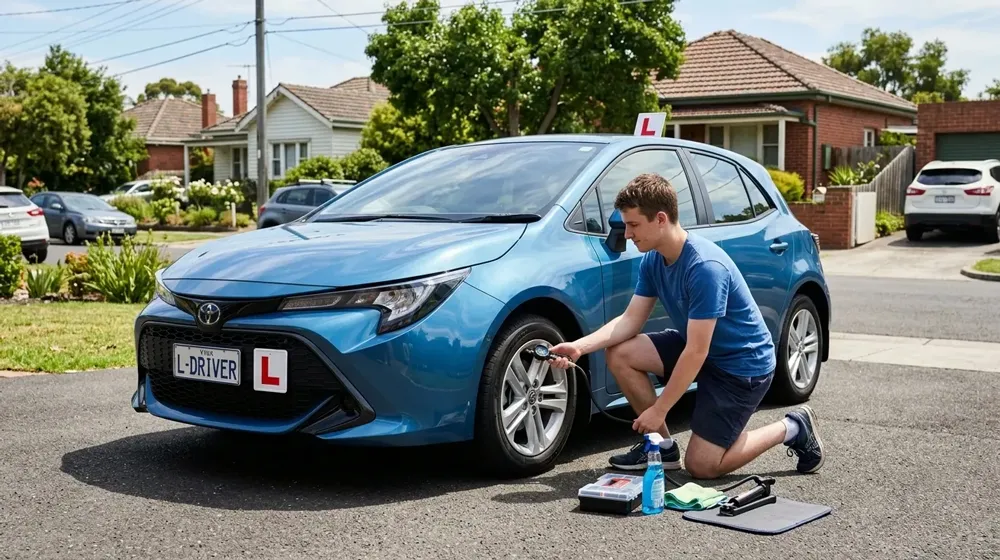
- Check the recommended tyre pressure in your owner’s manual or on the sticker inside the driver’s door frame.
- Use a reliable tyre pressure gauge or an air compressor with a pressure display.
- Check the pressure when the tyres are cold, ideally before driving.
- Adjust the pressure according to the manufacturer’s recommendation.
- Remember to check the spare tyre if your vehicle carries one.
As a general habit, check tyre pressure every week or fortnight where practical, and always before a long journey. Avoid relying on the appearance of a tyre alone because some underinflated tyres can look normal.
Check Tyre Tread and Look for Damage
Look across the tyre tread for uneven wear, cuts, cracks, bulges or objects embedded in the rubber. Pay attention to both the inner and outer edges where possible.
In Victoria, road tyres must generally have at least 1.5mm of tread depth in their principal grooves, subject to the applicable tyre requirements. However, reaching the legal minimum is not a good reason to delay replacement. Reduced tread can affect grip and water dispersal, especially in rainy conditions.
- Check for uneven tyre wear.
- Look for bulges, cracks and deep cuts.
- Replace damaged or excessively worn tyres.
- Ask a qualified tyre professional about rotation and wheel alignment when needed.
For more detailed information, read Transport Victoria’s tyre maintenance and repair guidelines.
4. Check Engine Oil and Coolant Levels
Engine oil and coolant play important roles in keeping your vehicle operating correctly. Ignoring low fluid levels or leaks can lead to serious mechanical damage.
Engine Oil
Engine oil lubricates moving engine components and helps reduce friction and heat. If your vehicle has a conventional engine with a dipstick, you can check the oil level by following the instructions in your owner’s manual.
- Park on level ground and switch off the engine.
- Allow the engine to settle and cool as recommended by the manufacturer.
- Locate the engine oil dipstick.
- Remove it, wipe it clean and insert it again.
- Remove it once more and check that the oil level is between the minimum and maximum marks.
If the oil level is low, use only the oil specification recommended for your vehicle. Never ignore an oil pressure warning light or unusual engine noises.
Engine Coolant
Coolant helps regulate engine temperature and prevents overheating. Check the coolant level in the reservoir when the engine is completely cool.
Never remove a radiator cap or open a pressurised cooling system while the engine is hot. Hot coolant can cause serious burns. If you notice repeated coolant loss, leaks or overheating, have the vehicle inspected by a qualified mechanic.
5. Understand Your Dashboard Warning Lights
One of the most useful skills for a new driver is knowing what dashboard warning lights mean. These lights alert you to potential problems with your vehicle and should never be ignored.
Warning Lights You Should Recognise
- Oil pressure warning: Safely stop the vehicle and switch off the engine as soon as possible. Continuing to drive can cause serious engine damage.
- Engine temperature warning: Stop somewhere safe and follow the manufacturer’s overheating instructions. Never open a hot cooling system.
- Battery warning: This usually indicates a problem with the charging system rather than simply a weak battery. Stop in a safe location as soon as practical and arrange a professional inspection.
- Brake warning: Check the owner’s manual. If the warning remains on after releasing the parking brake or braking feels abnormal, stop safely and seek assistance.
- Check engine light: A steady light generally requires prompt diagnosis. If it flashes or the engine runs roughly, reduce risk and stop safely for professional advice.
- Tyre pressure warning: Check tyre pressure and condition as soon as it is safe to do so.
The meaning of some dashboard symbols varies between vehicle models. Always refer to your owner’s manual rather than guessing what a warning means.
6. Battery, Brakes and Lights: What New Drivers Should Know
Car Battery
A weak battery can make starting your car difficult or leave you stranded unexpectedly. Watch for slow engine cranking, dim lights or repeated starting problems.
Extreme temperatures, frequent short journeys and battery age can all affect battery performance. If you notice these symptoms, arrange a battery test rather than waiting for the vehicle to stop starting.
Brakes
Your braking system is essential for safe driving. Pay attention to changes in brake pedal feel, unusual squealing or grinding noises, vibrations or a vehicle that pulls to one side when braking.
Never attempt to ignore unusual braking behaviour. Have your brakes inspected by a qualified mechanic, and avoid driving if you suspect a serious brake problem.
Headlights and Indicators
Working lights help you see the road and make your intentions visible to other drivers. Regularly check:
- Low-beam and high-beam headlights.
- Front and rear indicators.
- Brake lights.
- Reverse lights.
- Tail lights and number plate lights.
Clean dirty light covers and replace faulty bulbs or have the lighting system repaired when necessary.
7. Windscreen, Wipers and Visibility
Clear visibility is essential in all driving conditions. Rain, road spray, dust and dirt can quickly reduce your ability to see other road users.
Make sure you:
- Clean your windscreen inside and outside.
- Check wiper blades for cracks, damage or streaking.
- Keep windscreen washer fluid topped up.
- Check that front and rear washers work correctly.
- Arrange repairs for windscreen cracks or damage that affects visibility.
If you’re driving in heavy rain, slow down appropriately and leave more distance between your vehicle and the car ahead. You can also read our guide to wet weather driving in Melbourne for practical advice on staying in control on slippery roads.
8. Car Maintenance Tips for Melbourne’s Weather
Melbourne is known for changing weather conditions. A sunny morning can quickly turn into a rainy afternoon, so your vehicle should be prepared for different driving environments.
Driving in Winter and Rain
- Check tyre pressure and tread condition regularly.
- Make sure wipers can clear water effectively.
- Keep washer fluid topped up.
- Check headlights and brake lights before driving in poor visibility.
- Allow extra stopping distance on wet roads.
Driving During Summer
- Monitor engine temperature and investigate coolant leaks.
- Have an ageing battery tested if starting becomes difficult.
- Check tyre condition and pressure before longer journeys.
- Check that your air conditioning system is working properly and have any unusual engine temperature changes inspected.
- Keep drinking water available for longer trips.
Night Driving
Before driving at night, check your headlights, brake lights and indicators. Clean your windscreen and mirrors to reduce glare from other vehicles.
For more advice, read our guide to night driving lessons in Melbourne.
9. How Often Should You Service Your Car?
Regular servicing helps identify mechanical problems before they become more serious. However, there isn’t one service interval that suits every vehicle.
Your vehicle’s manufacturer provides a recommended servicing schedule based on its engine, design and operating requirements. Many vehicles require servicing according to a particular kilometre interval or time period, whichever comes first.
If you regularly drive in heavy stop-start traffic, take short trips or travel on dusty roads, your vehicle may require more frequent servicing. Always check your manufacturer’s recommendations or ask a qualified mechanic about the right schedule for your vehicle.
A professional service may include inspections of:
- Engine oil and oil filter.
- Braking system and brake components.
- Tyres, tread wear and wheel alignment.
- Battery and charging system.
- Coolant and other vehicle fluids.
- Suspension and steering components.
- Lights, wipers and other safety equipment.
For further guidance, see RACV’s guide to car servicing and maintenance.
10. What Should You Keep in Your Car for Emergencies?
Even a well-maintained vehicle can experience unexpected problems. Keeping a few useful items in your car can make an emergency easier to manage.
Useful Emergency Supplies
- Fully charged mobile phone and charging cable.
- Portable torch with working batteries.
- First aid kit.
- Drinking water and a small supply of non-perishable snacks.
- Reflective safety vest.
- Jumper leads or a suitable portable jump starter.
- Basic vehicle information and roadside assistance details.
- Spare tyre or manufacturer-approved tyre repair kit, if supplied with the vehicle.
- Blanket for unexpected delays in cold weather.
Only use equipment you understand and follow the vehicle manufacturer’s instructions. Never attempt roadside repairs in an unsafe location or stand close to moving traffic.
11. What to Do If Your Car Breaks Down in Melbourne
A breakdown can be stressful, especially if you’re a new driver. Knowing how to respond safely can help protect you, your passengers and other road users.
- Stay calm: Keep control of the vehicle and avoid sudden steering or braking.
- Move to a safe location: If possible, pull into an emergency stopping lane or another safe area away from moving traffic.
- Switch on hazard lights: Make your vehicle visible to approaching drivers.
- Leave the vehicle only if safe: If you need to exit, use the passenger side where possible and check for traffic first. If it isn’t safe to leave, remain inside with your seatbelt fastened.
- Stay away from moving traffic: Never attempt to cross a freeway or busy road on foot. If there is a safety barrier and you can reach it safely, wait behind it.
- Contact assistance: Call roadside assistance or emergency services if required.
If your vehicle cannot be moved and is blocking traffic on a major Melbourne road, contact Transport Victoria’s Traffic Management Centre on 13 11 70. Call 000 if there is an emergency involving immediate danger or serious injury.
For official advice, read Transport Victoria’s breakdown and incident response guidance.
12. Build Safe Driving Habits Alongside Car Maintenance
Looking after your car is only one part of becoming a safe driver. You also need to develop good driving habits, understand road rules and learn how to respond to changing traffic conditions.
As a learner driver, practise checking your mirrors, maintaining a safe following distance, observing speed limits and anticipating potential hazards. These habits become easier with consistent practice and professional guidance.
You may also find our guide to essential safe driving tips for learner drivers useful as you build confidence behind the wheel.
Frequently Asked Questions About Car Maintenance for New Drivers
1. How often should new drivers check their car?
Check your vehicle’s general condition before driving, particularly its tyres, lights, windscreen and dashboard warnings. Check tyre pressure regularly, ideally every week or fortnight, and inspect fluid levels according to your vehicle manufacturer’s instructions.
2. What is the most important car maintenance task?
There isn’t just one. Tyre condition, braking performance, correct fluid levels, working lights and regular professional servicing all play important roles in vehicle safety.
3. What is the legal minimum tyre tread depth in Victoria?
For standard road tyres, the minimum tread depth is generally 1.5mm in the principal grooves, subject to the applicable requirements. However, replacing tyres before they reach the legal minimum is a sensible safety decision.
4. Can I check engine oil and coolant myself?
Yes, most drivers can perform basic checks by following their vehicle’s owner’s manual. Always check coolant when the engine is completely cool and never open a hot pressurised cooling system.
5. How often should I service my car?
Follow the service schedule recommended by your vehicle manufacturer. Depending on the model, servicing may be required after a certain number of kilometres or months, whichever comes first.
6. What should I do if a warning light appears while driving?
Check your owner’s manual to identify the warning. Some warnings require you to stop safely and switch off the engine immediately, while others require prompt professional inspection. Never ignore a serious warning light.
7. Do new drivers need to know how to repair a car?
No. However, understanding basic vehicle checks, recognising warning signs and knowing when to contact a mechanic are important skills for every driver.
8. Does driving in Melbourne require extra car maintenance?
Melbourne’s changing weather, heavy traffic and frequent stop-start driving can place additional demands on some vehicle components. Pay attention to tyres, brakes, wipers, battery performance and your manufacturer’s servicing recommendations.
Ready to Become a Safer and More Confident Driver?
At Start Driving School, we help learner drivers and newly licensed drivers develop practical driving skills, understand road safety and build confidence behind the wheel with professional automatic driving lessons.
Whether you’re preparing for your first lesson or improving your driving skills, we’re here to help you take the next step.
Call • SMS • WhatsApp
Professional Driving Lessons Across South East Melbourne
Start Driving School proudly provides automatic driving lessons for learner and new drivers across South East Melbourne, including:
Officer Driving Lessons | Pakenham Driving Lessons | Berwick Driving Lessons | Clyde Driving Lessons
Learn safe driving habits, improve your confidence and prepare for independent driving with professional instruction from Start Driving School.