Preparing for your Pakenham drive test? Knowing the local roads and traffic conditions can make your practice sessions more useful and help you feel more comfortable behind the wheel.
This guide covers the Pakenham East testing area, the driving situations you should practise, common mistakes learners make, and practical ways to prepare for your VicRoads drive test.
If you’re learning in an automatic car, you can also prepare with our automatic driving lessons in Pakenham and practise the skills you’ll need for your test.
Where Is the Pakenham Drive Test Centre?
The Pakenham East Licence Testing Centre is currently located at 129 Treloar Lane, Pakenham East VIC 3810. Drive tests are available by appointment only.
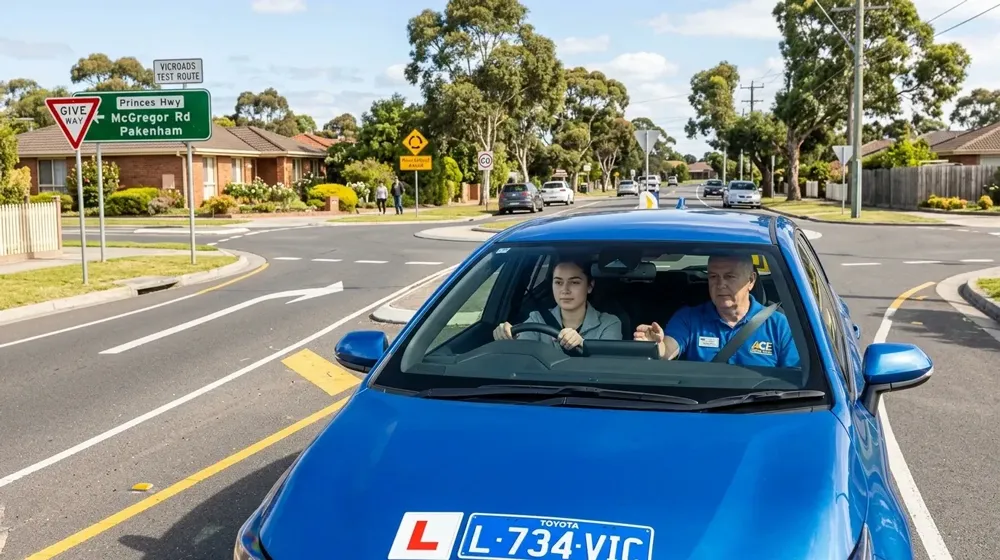
Before your test, plan your trip to the testing centre and allow enough time to arrive without rushing. It’s also a good idea to practise on nearby roads before test day so the local driving environment feels familiar.
Important: VicRoads has advised that the Pakenham East Licence Testing Centre will relocate to 33 Exchange Drive, Pakenham in November 2026. Check the official VicRoads location details before your appointment.
How the Pakenham Driving Test Works
The Victorian Drive Test is designed to assess whether you can drive safely and independently in real traffic. Before the on-road assessment begins, the testing officer completes a pre-drive check to make sure you are ready to start the test.
The on-road assessment is divided into Stage 1 and Stage 2. You must pass Stage 1 before continuing to Stage 2. The test can include a range of everyday driving situations, such as starting and stopping, turning, lane changes, intersections and other traffic conditions.
Rather than trying to memorise a particular Pakenham driving test route, focus on developing consistent habits. Good observation, safe gap selection, appropriate speed, correct road positioning, signalling and safe decision-making are more important than knowing every turn in advance.
What Driving Skills Are Tested on Pakenham Routes?
Your Pakenham drive test is not simply about keeping the car moving. You need to show that you can observe the road, control the vehicle and make safe decisions in different traffic situations.
- Observation: Check your surroundings regularly and identify potential hazards early.
- Mirror use: Use your mirrors effectively to stay aware of traffic around your vehicle.
- Head checks: Check your blind spots when required before changing direction or road position.
- Speed management: Choose a safe and appropriate speed for the road, traffic and posted speed limit.
- Road positioning: Maintain the correct position in your lane and position the vehicle appropriately before turns and other manoeuvres.
- Giving way: Apply the correct give-way rules at intersections, roundabouts and other situations.
- Lane changes: Observe, signal, check your blind spot and move only when it is safe to do so.
- Intersections and roundabouts: Approach with appropriate speed, observation and positioning, and make safe decisions about other road users.
- Hazard awareness: Recognise hazards such as pedestrians, cyclists, parked vehicles and changing traffic conditions.
- Independent driving: Follow the testing officer’s instructions and make safe decisions without relying on constant prompts.
Tip: Practise these skills across different roads and traffic conditions around Pakenham instead of trying to memorise one particular test route.
Common Mistakes That Can Cause You to Fail the Pakenham Drive Test
Knowing the common Pakenham drive test mistakes can help you focus your practice on the areas that matter most. Many test errors are related to observation, speed control, road positioning and making safe decisions in traffic.
- Incomplete observation: Failing to check mirrors, intersections or other road users properly can affect your assessment.
- Missing head checks: Not completing the required head check before changing lanes, merging or moving into another position can be a serious error.
- Poor speed management: Driving too fast for the conditions or failing to adjust your speed when the speed limit changes can affect your result.
- Incorrect road positioning: Poor lane position, especially when turning or approaching intersections, can create safety risks.
- Rushing at intersections and roundabouts: Entering without properly checking traffic or selecting a safe gap can lead to critical errors.
- Unsafe or late signalling: Failing to signal correctly or signalling too late can affect your ability to communicate your intentions to other road users.
- Failing to give way: Not following the correct give-way rules or forcing another road user to take evasive action can result in an immediate failure.
- Not responding to speed-zone changes: Make sure you notice changes in posted speed limits and adjust your speed promptly.
- Losing focus after a mistake: A small mistake does not necessarily mean you have failed. Stay focused and continue driving safely rather than allowing one error to affect the rest of the test.
Remember: A single minor mistake does not automatically mean you will fail. The important thing is to demonstrate safe, consistent driving and avoid errors that create a dangerous situation.
How to Prepare for Your Pakenham Drive Test
Good preparation for your Pakenham drive test is about more than driving around the testing centre. You should build the skills and confidence to handle different roads, intersections, traffic conditions and unexpected situations safely.
1. Practise Around the Pakenham Testing Area
Spend time driving on different roads around Pakenham East so you become familiar with intersections, lane changes, roundabouts, speed zones and changing traffic conditions. The goal is to become comfortable in the area rather than memorising a single route.
2. Practise the Skills Being Assessed
Work on observation, mirror use, head checks, signalling, speed control, lane positioning, giving way and safe gap selection. These skills should become consistent habits before test day.
3. Drive in Different Traffic Conditions
Do not practise only on quiet roads. Include busier streets, intersections, roundabouts, lane changes and different traffic conditions so you can make safe decisions when the road becomes more demanding.
4. Work on Your Weak Areas
If you regularly make the same mistake, focus your practice on that skill. This could include roundabouts, lane changes, parking, speed management, observation or intersections. Targeted practice is more useful than simply driving for more hours.
5. Practise Following Instructions Independently
During the test, you need to listen carefully to the testing officer and make your own safe driving decisions. Practise responding calmly to directions without relying on your instructor to tell you what to do next.
Tip: A good practice session should feel like real driving, not a memorised routine. Focus on making safe decisions consistently, even when the road or traffic conditions change.
Should You Practise the Pakenham Drive Test Route?
Practising around the Pakenham drive test area can be very useful, especially if you are unfamiliar with the local roads. It can help you become more comfortable with the types of intersections, roundabouts, speed zones and traffic conditions you may encounter.
However, you should not rely on memorising a specific Pakenham driving test route. Your actual test may take you through different roads or traffic situations, so you need to be able to respond safely rather than simply remember where to turn.
- Learn the local road layout: Become familiar with major intersections, roundabouts, lane arrangements and speed limits.
- Practise different routes: Avoid driving the exact same streets every time. Use different roads so you can adapt to changing conditions.
- Focus on decision-making: Practise choosing safe gaps, changing lanes, giving way and responding to other road users.
Remember: The goal is not to memorise the test route. The goal is to become confident enough to handle whatever road and traffic conditions you encounter during your Pakenham drive test.
Taking Your Pakenham Drive Test in an Automatic Car
If you learn in an automatic car, you can prepare for your Pakenham drive test in the same type of vehicle you’ll use for the assessment.
Start Driving School provides automatic driving lessons in a Toyota Corolla hatchback with dual controls. Lessons focus on the practical skills you need for safe driving and the areas assessed during your VicRoads drive test.
You can learn more about our automatic driving lessons in Pakenham, or see our driving lesson prices in Pakenham for lesson packages, mock tests and driving test options.
Pakenham Drive Test Day Checklist
Being organised on the day of your Pakenham drive test can help you avoid unnecessary stress. Before leaving home, make sure you have everything you need and that your vehicle is ready for the assessment.
- Check your test location: Make sure you know whether your booking is at the current Pakenham East Licence Testing Centre or the new Pakenham location.
- Bring your learner permit: Have your required licence or permit information ready for the test.
- Arrive early: Give yourself enough time to arrive, park and prepare without rushing.
- Check the vehicle: Make sure the car is clean, registered, roadworthy and meets the requirements for the drive test.
- Check the L plates: Make sure the required L plates are correctly displayed on the vehicle.
- Check the controls: Make sure the lights, indicators, mirrors, seatbelts, windscreen and other required equipment are working properly.
- Bring any required logbook information: If applicable, make sure you have completed and can provide the required evidence of supervised driving hours.
- Stay focused: Take a few moments before the test to settle yourself and concentrate on safe driving rather than worrying about the result.
Tip: Check the official VicRoads drive test requirements before your test, as you are responsible for bringing the required documents and an eligible vehicle.
What to Practise the Day Before Your Pakenham Drive Test
The day before your Pakenham drive test is not the time to completely change your driving routine or spend hours trying to memorise a route. A short, focused practice session can be more useful.
- Review your weak areas: Spend extra time on the skills you have been making mistakes with during previous lessons.
- Practise observation: Focus on mirrors, head checks, intersections and identifying hazards early.
- Drive around the testing area: Become familiar with the local roads and traffic conditions without trying to memorise every turn.
- Practise low-speed manoeuvres: Review the parking manoeuvres you have been practising with your instructor.
- Check your speed: Pay attention to speed-limit signs and practise adjusting your speed smoothly when conditions change.
- Do a short mock drive: If possible, complete a practice drive where you receive directions without being told how to handle each situation.
- Prepare your vehicle: Make sure the car is clean, roadworthy and ready for the test.
Tip: Keep your final practice session focused and avoid exhausting yourself. You want to arrive on test day feeling prepared, alert and confident in your driving skills.
Practise With a Pakenham Driving Test Mock Test
A Pakenham driving test mock test gives you a chance to practise in a more realistic test-style situation before your actual VicRoads assessment.
- Practise driving with less instructor prompting.
- Identify habits that still need work.
- Improve observation, head checks and speed management.
- Practise road positioning, intersections, roundabouts and lane changes.
- Build confidence before your actual drive test.
Start Driving School offers a $75 Mock Driving Test for learners preparing for their Pakenham drive test.
Need a Car for Your Pakenham Drive Test?
If you do not have access to a suitable car for your Pakenham drive test, you can use an eligible instructor’s vehicle for your drive test, provided it meets the current VicRoads requirements.
At Start Driving School, you can book a driving test that includes the use of our automatic Toyota Corolla for your test. You can also practise in the same vehicle beforehand, helping you become familiar with the car and its controls.
Our Driving Test
- Automatic Toyota Corolla: Take your test in the same type of car used for your automatic driving lessons.
- Dual controls: The vehicle is equipped with dual controls for learner practice.
- Test-day preparation: Get familiar with the vehicle before your test rather than driving an unfamiliar car on the day.
- Driving test : Available for $170.
Before your test, make sure the vehicle you plan to use meets the current VicRoads requirements. This includes being registered and roadworthy and having the required safety equipment and controls.
If you need a car for your Pakenham drive test, you can book your driving test with Start Driving School.
What Happens After You Pass Your Pakenham Drive Test?
Passing your Pakenham drive test is an important milestone, but safe driving doesn’t stop when you get your licence. Keep practising good habits such as observation, speed management, safe following distances and hazard awareness.
If you still feel unsure about driving alone, additional lessons can help you build confidence in busy traffic, unfamiliar roads, night driving or longer trips.
Pakenham Drive Test FAQ
Where is the Pakenham drive test centre?
The Pakenham drive test is conducted at the current testing location shown on your booking confirmation. Check the official VicRoads information before your test to confirm the current location and requirements.
Can I practise the Pakenham driving test route?
You can practise driving around the Pakenham testing area and become familiar with local roads and traffic conditions. However, it is better to develop the skills to handle different situations safely rather than rely on memorising one specific test route.
What skills are assessed during the Pakenham drive test?
The test assesses skills including observation, signalling, speed choice, gap selection, following distance, road positioning, stopping and parking. You also need to demonstrate safe decision-making in real traffic.
Can I take my Pakenham drive test in an automatic car?
Yes. You can take the test in an eligible automatic vehicle. If you pass your test in an automatic car, an automatic condition applies during your probationary period.
Can I use my driving instructor’s car for the test?
Yes, an instructor’s vehicle can be used if it meets the current VicRoads requirements for the drive test. Start Driving School offers a driving test for $170 using an automatic Toyota Corolla.
How can I prepare for my Pakenham drive test?
Practise around the Pakenham testing area, work on your weak driving skills and complete practice drives where you follow instructions independently. A mock test can also help identify areas that need more practice before the real assessment.
How much does the Start Driving School driving test cost?
The Driving Test is $170 and includes the use of an automatic Toyota Corolla for your drive test. You can book your driving test package online.
Still preparing for your test? Regular practice and targeted feedback can help you build the skills and confidence you need to drive safely on test day.
Ready for Your Pakenham Drive Test?
Prepare with focused driving lessons around Pakenham, practise the skills assessed during the VicRoads Drive Test and build your confidence before test day.
Start Driving School offers automatic driving lessons, mock tests and a driving test package with an automatic Toyota Corolla.
Call 0493 176 667 to discuss your driving test preparation.